Clarity and Color

When I first saw Tony Mendoza’s work, I just blinked a little at the brilliant colors and then smiled at the figure. It was a woman who looked like the Mona Lisa but Cuban-American style with a suggestive smile, a cigarette in one hand and a little cup of Starbucks in the other. There is a sly and ironic sense of humor characteristic of his work that is appealing.

Mona Caffeine and Nicotine

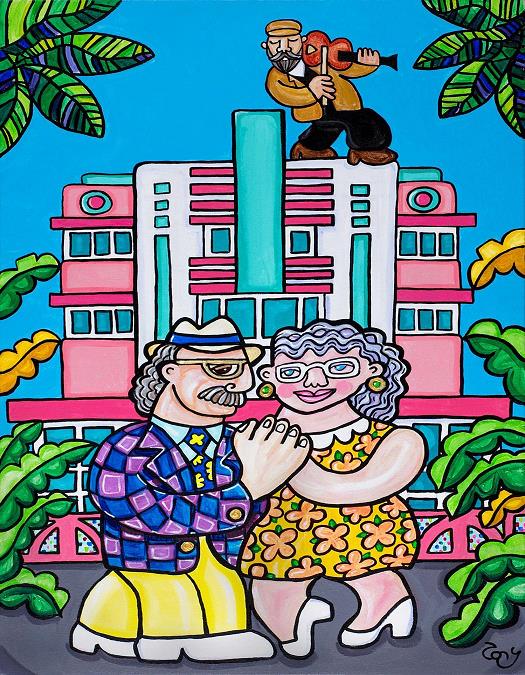
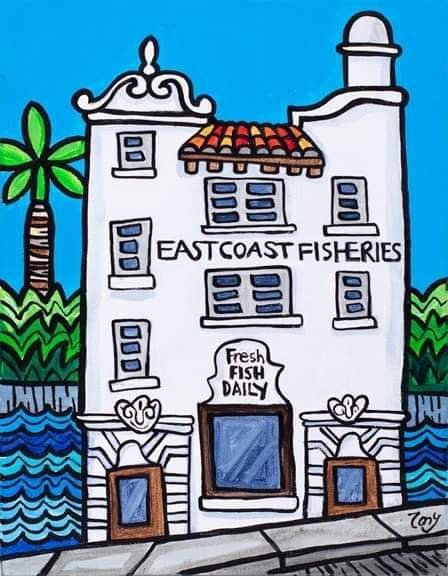
His work features Miami landmarks, happy parties, ironic depictions of the city and Cuban idiomatic expressions.

In my mind, when someone says something, I see it.

Tony Mendoza

He draws on the experiences of a Cuban-American who was born in New York but grew up in Little Havana. He graduated from Miami Senior High and studied Commercial Art at Miami-Dade College. Now, he shares an art studio on Bird Road with another artist.

I love his work based on idioms that only Cuban-Americans use in conversations, but he says that he really enjoys hearing other interpretations from people who do not know the idiom but see his paintings in a novel way.
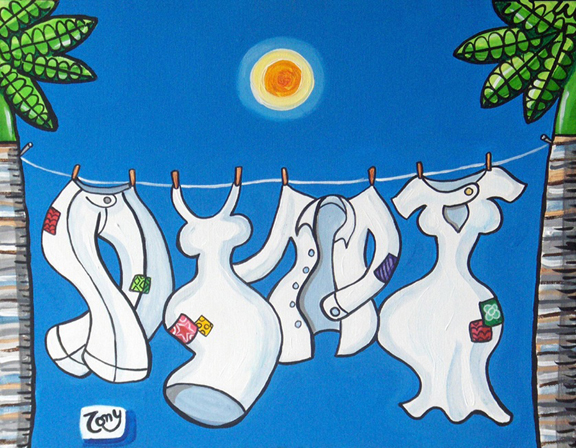
Ropa Vieja, Tonymendozaart.com

This painting is of some patched-up laundry on a line. Every Cuban-American or person familiar with Cuban cuisine knows that “Ropa Vieja” is a traditional entree made from meat. Yet, it also translates into “old clothes” which makes the painting a visual pun. He said that someone purchased the painting because it reminded her of Summer. She lives in snowy climes and likes to remember times when she can hang laundry on a line.

My parents emphasized the culture always thinking that we were going back.

Tony Mendoza

Growing up in Miami, he was surrounded by nostalgia for Cuba. He injects this añoranza for other times into colorful houses and scenes from small villages where La Virgen de la Caridad del Cobre floats above newlyweds. There is always greenery and sunshine in his Art just like our parents’ memories of la Cuba de Ayer.

I’ve painted murals and paintings about Cuba, but I’ve never been to Cuba.

Tony Mendoza

There are many people of our generation who live in a mental space where Cuba and the United States cohabitate in an uneasy peace filled with nostalgia and just a little sorrow. Mendoza uses the word “hyphenated” just like Firmat in Life on the Hyphen. It is part of the Cuban-American exile community experience.

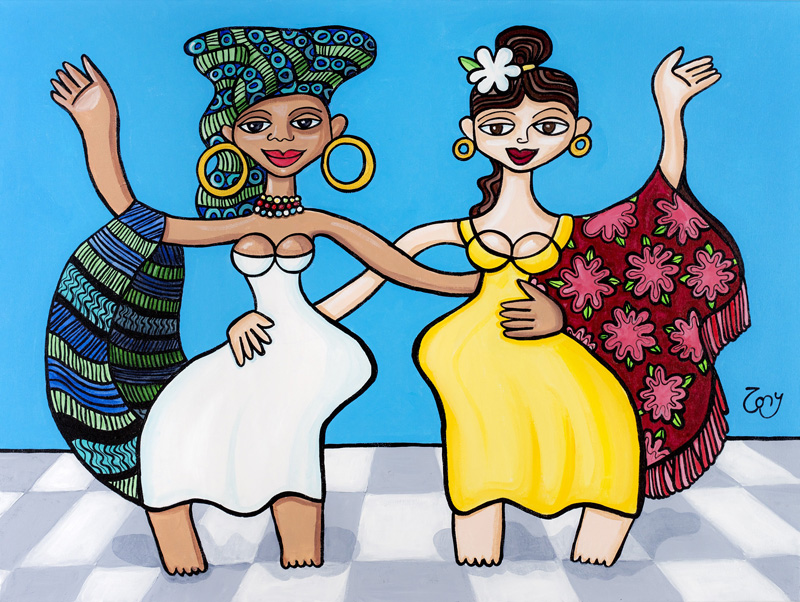
He paints Miami’s best scenes: bright Art Deco buildings, street parties and all those palm trees. The people are modern Miami. There are long-haired men with bulging muscles, hoop earrings and wild tattoos. There are smiling women with impossibly tight dresses and ample bosoms.
Sisters

Regardless of the success that he has found since beginning his career as an artist in 2002, he is approachable and kind, a sensitive soul who appreciates Art’s ability to change people.

It’s gratifying because you want your Art to touch people.

Tony Mendoza

For more information about the artist or to order from his body of work, visit http://www.tonymendozaart.com.
Off to the Las Olas Art Fair

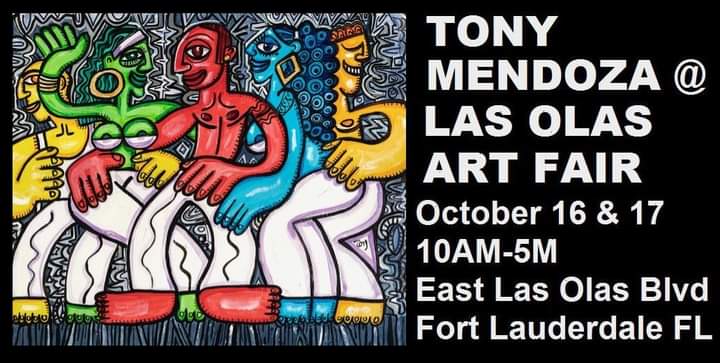
Beloved Miami artist Tony Mendoza will be headed to the Las Olas Art Fair this weekend on the 16th and 17 the of October. He will be at the fair from 10 AM showing his work.

Artwork by Tony Mendoza.

He said that he is looking forward to the event because it has been some time since something like it happened.

Mendoza is a long-time resident of Miami. He has a space to work in the West Miami area and has a long history of work. He has completed murals for the city of Miami, for prominent buildings and spotlighting local culture.

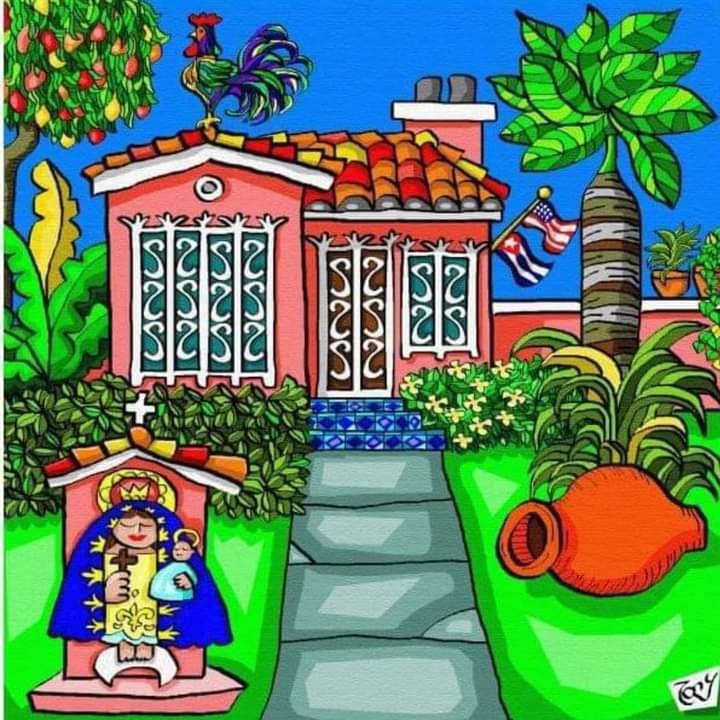
Cuban-American Casita, by Tony Mendoza.

This work displays what he sees as the Cuban family’s yearning for the “lost isle” as it recreates the island’s architectural style here in Miami. Notice the small icon of Our Lady of Charity, the patroness of Cuba.

More in-depth information on Mr. Mendoza will be here shortly.

Art trends…then and now

Back when I was in college at the University of Miami, majoring in art, I wrote a paper before graduation called, “Whatever Happened to 2-D Art?” This was back in the late 60’s and the premise was that although there had been a steady progression of art movements and styles in paintings over the centuries, from Medieval Art, Renaissance Art, Baroque Art, Rococo Art, Neoclassical Art, Romanticism, Realism, Pre-Raphaelite Art, Impressionism, Post-impressionist, Symbolism, Fauvism, Expressionism, Cubism, Futurism, Abstract Art, Dada, Precisionism, Surrealism, Art Deco, Pop Art, Photorealism and others in which groups of artists were influenced by each other and periodically launched a new style. But after a certain point it seemed to me that the advancement of 2-D art as far as new styles or trends had grown stagnant. Paintings and drawings and etchings seemed to be going in many different directions, some repeating earlier styles, some doing different things, but with no bold new direction that gathered a following, while sculpture did seem to be advancing.

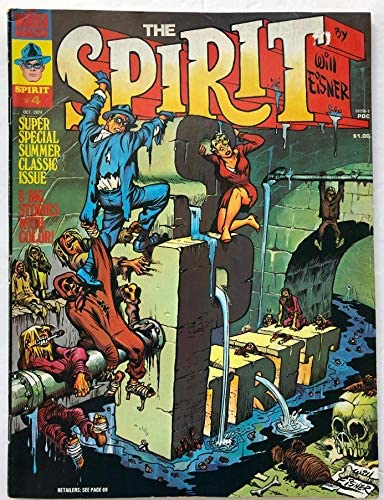
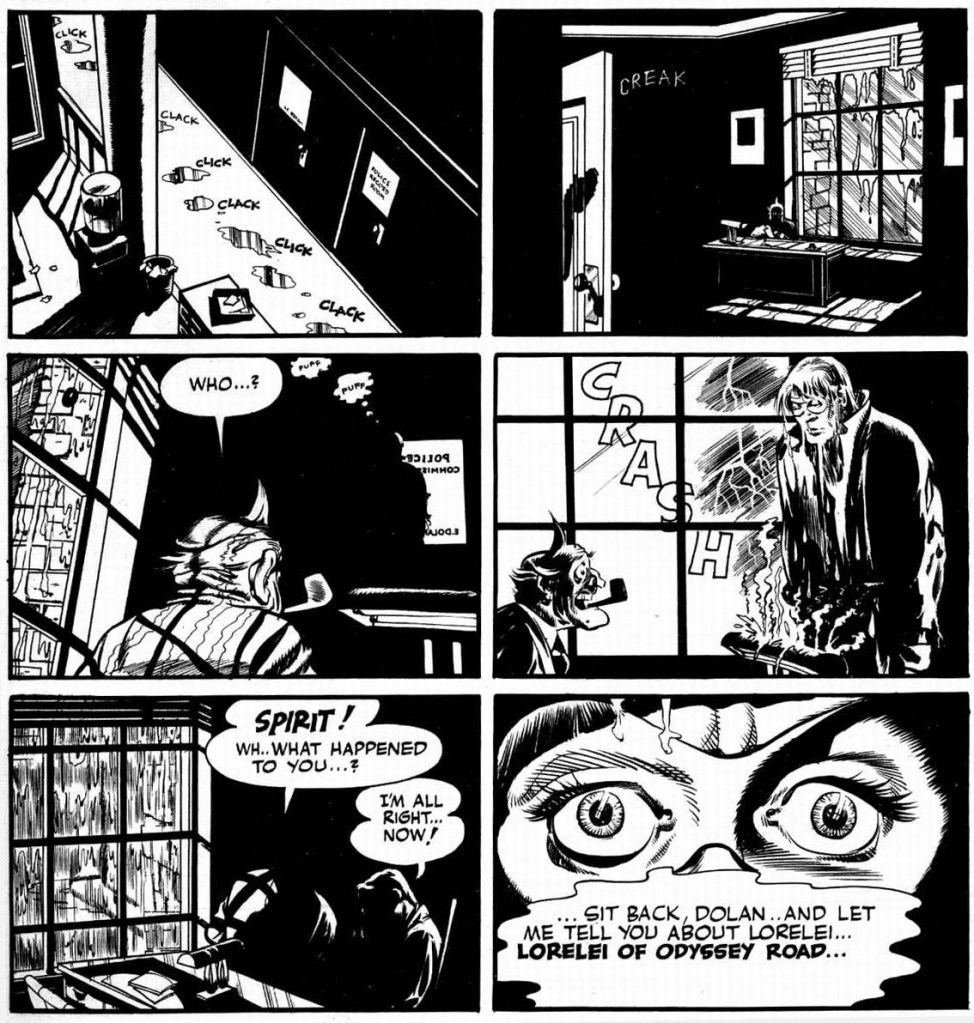
In my essay I pointed out one exception to this, one surprising area where something new seemed to be developing. Oddly, it was in the field of comic book art. Will Eisner’s “Spirit” comic book pages featured panels that had sequential action…where A walking figure trailed footstep sound effects (in type—“click, clack, click, clack) in one panel. He turned the title into a building with lights, doors and windows, and added other movie style visual effects. Other artists of comic books and graphic novels followed his lead, adding more innovative touches. Interestingly, today’s movies are being influenced by the style of the comic books that reflected movie styles.

Interior panel showing progression of footsteps. Image from Will Eisner – Lambiek Comiclopedia.
Cover or first page using Spirit name as architectural image.

It’s hard to say if a new, cohesive trend-setting style or approach in paintings will emerge and become recognisable enough to label. But it will be interesting to see what develops!

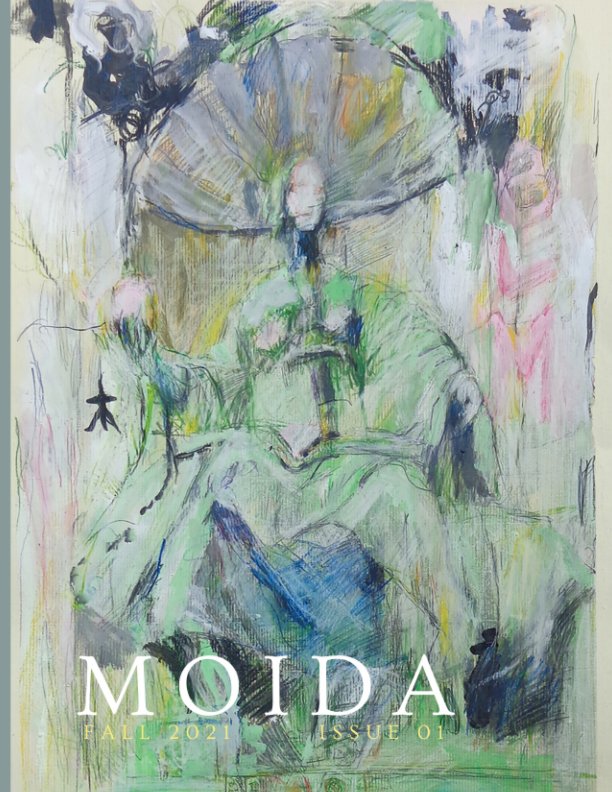
Helen Lemus Published in Culture Issue of Moida

The magazine chose the best to represent those who live on borders of nations, expressions and convictions. Helen Lemus wrote an essay about her experience with growing up on the psychological and social border between American culture and her parent Cuban culture.

The essay is short but lyrical. Lemus uses cleverly constructed sentences to share her vulnerability growing up and her reactions to the seemingly impossible task of being two peoples American and Cuban.

The essay taps into cultural history by relating cross cultural references to the the myths surrounding the image of the turtle. In her research, Lemus found that the animal was held in contempt by the Judeo-christian myth tradition but was treasured in Egypt and other nations.

For example, in certain African places, the turtle was seen as a trickster that was able to find a way out of difficult situations. This came from Nigeria from the Yoruba people. There is a great number of Yoruba influence in Cuba from religion to music.

https://www.moida.co/magazine is the link to purchase the magazine.