Arty’s Loft No. 2
Art in the Community
This is an introductory list of books on Impressionism available at the library or for purchase on online booksellers. There are two in Spanish in case your linguistic tastes swing that way. 😊
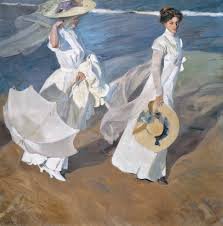
Joaquin Sorolla was a Spanish Impressionist who used light in his paintings in such a way that he was called a Luminist. His paintings feature subjects of idyllic situations with resplendent beaches, beautiful parks and elegant houses. This image was from the website http://www.mymodernmet.com.
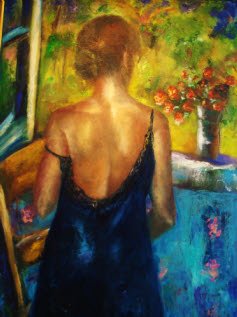
Mildrey Guillot is a Cuban painter who trained in Spain. She paints what she feels. Her emotive and rich paintings all are born of her feelings when she starts to paint. She uses color in a passionate way. She has a gallery in Miami, Florida.
360 Color Paintings of Joaquin Sorolla and Batista, $2.99, Amazon.
Exhibition on screen: The Impressionists, $21.49, Amazon.
The Impressionists, $67.30, Amazon.
Impressionist Art: 1860-1920, $15.00, Barnes and Noble.
Happy reading!
Xavier Cortada is an accomplished and recognized artist based in South Florida. He is currently the artist in residence at Pinecrest Gardens in the Village of Pinecrest. His work has been exhibited in more than a hundred places around the country and the world. He is also a dedicated environmental activist deeply concerned about the natural world he loves, and its future.
I want to create an awareness about who we are as stewards of this planet
Xavier Cortada in an interview
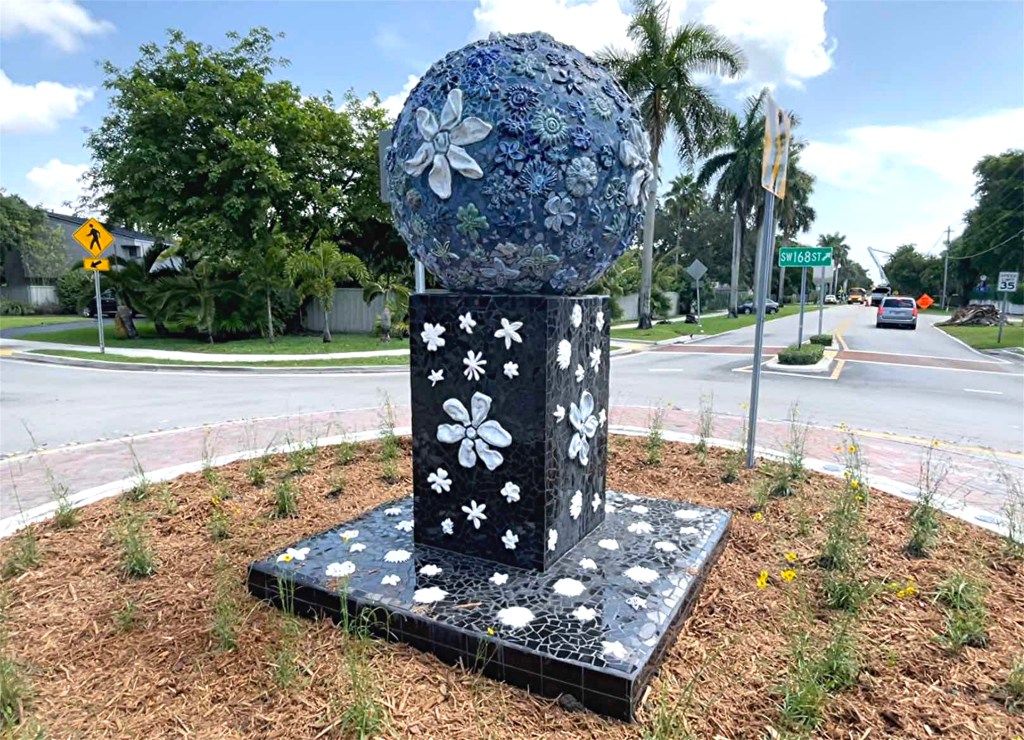
One recent project was called “Flower Force,” which involved a meticulously constructed sculpture featuring ceramic flowers, installed in a traffic circle on Palmetto Bay on October 10th of this year. It was also an outreach project in which 200 registered Palmetto Bay households received a free hand-painted ceramic flower sculpture and a live wildflower plant to place in their own yards, to participate in Cortada’s eco-art reforestation effort to protect local pollinators and habitats.
“We live in the here and now,” says Cortada. “It’s very hard for us to visualize what was. Our manicured lawns and landscapes once were wilderness. It’s hard for us to connect with our history. That wouldn’t be so tragic if the future consequences weren’t so dire, especially for Miami. As an artist, it’s my responsibility to try to create a piece that harkened to that moment. When creating art I look at the site specificity.”
Another recent project also involved the participation of homeowners. “Underwater HOA” depicted South Florida’s vulnerability to melting glaciers. Residents were encouraged to install an “Underwater HOA” yard sign on their front lawn during the first week of December 2018. The yard sign showed how many feet of melting glacial water must rise before their property is underwater.
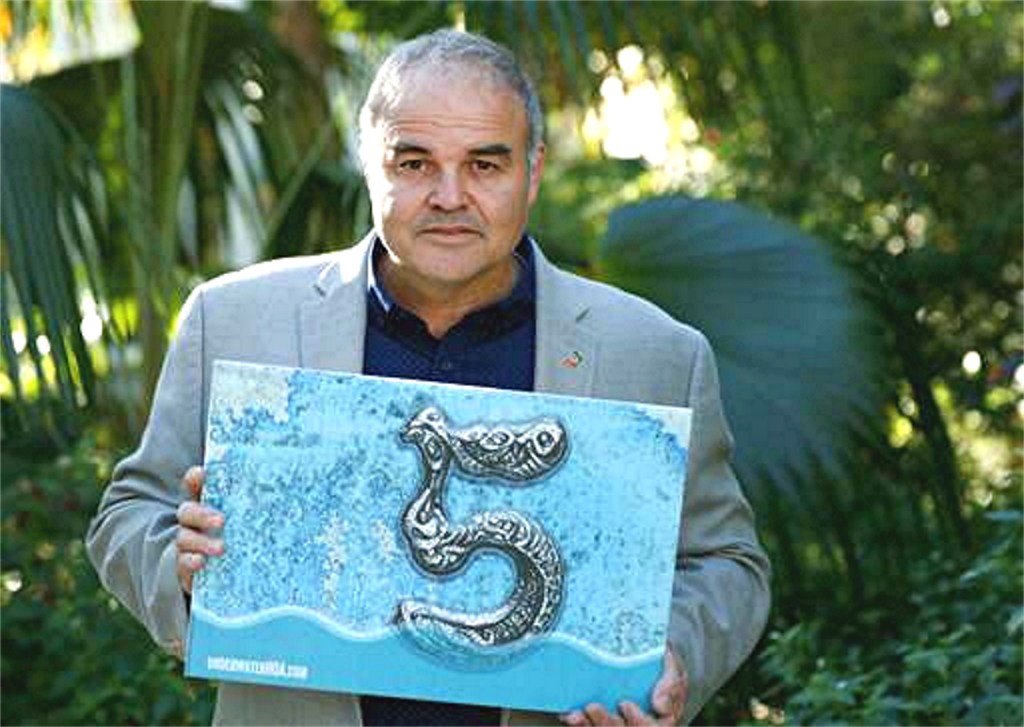
“The signs’ backdrop shows the watercolor paintings I made in Antarctica by melting ice from the very glaciers that threaten to melt and drown Miami,” says Cortada. “By mapping the crisis to come, I make the invisible visible. Block by block, house by house, neighbor by neighbor, I want to make the future impact of sea level rise something no longer possible to ignore.”
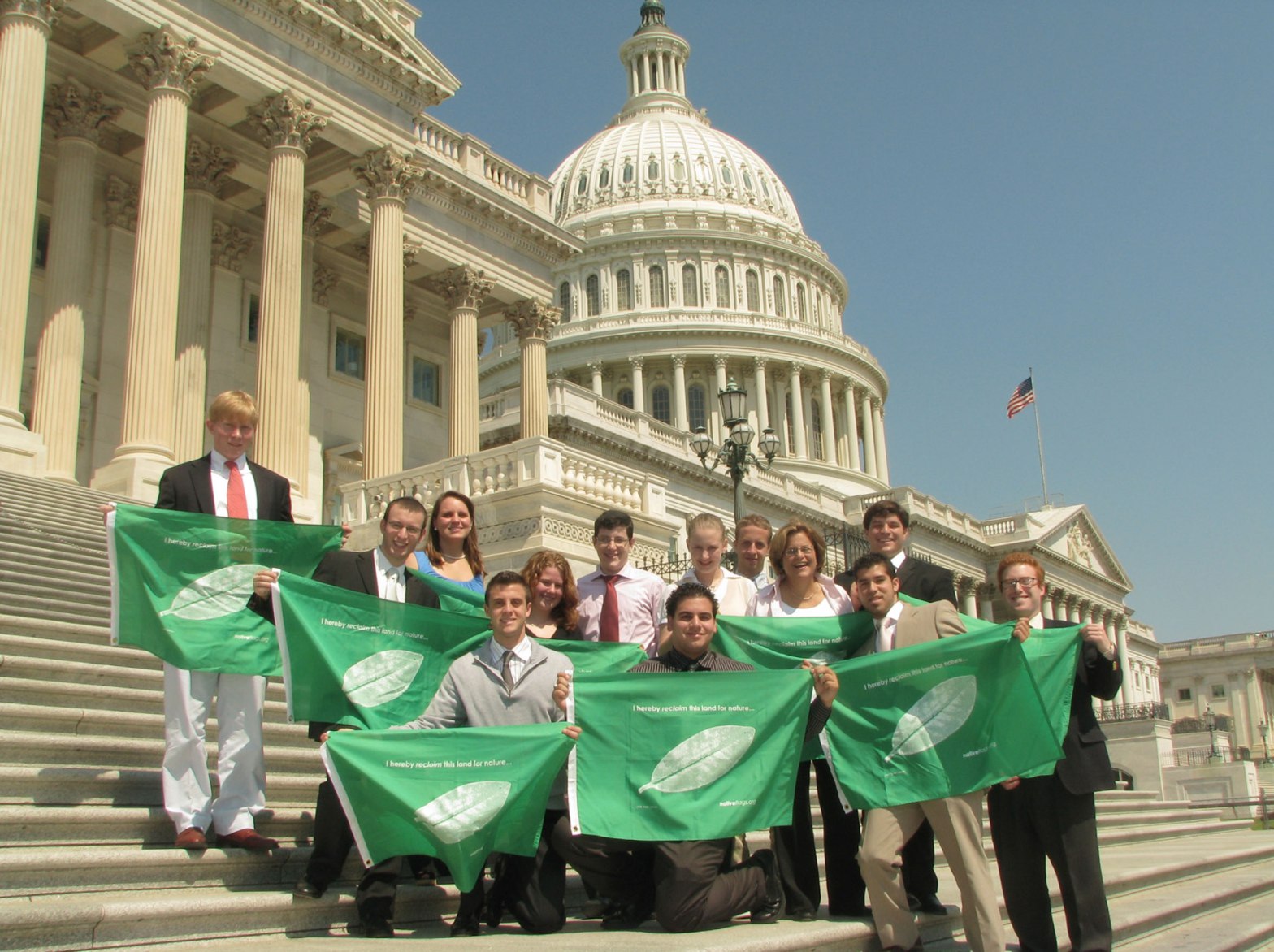
Cortada arrived at the North Pole on June 29th, 2008, and planted a green flag to “reclaim it for nature,” concerned that as the Arctic sea ice melts, nations clamor to raise their flags over newly open waters to claim the natural resources that lie beneath them – oil, manganese, diamonds, fish – and to control shipping lanes.
His HELLO project, timed to coincide with the 26th United Nations Climate Change Conference, also known as COP26, aims to reframe the way we see one another and our collective vulnerability due to global climate change and sea level rise.
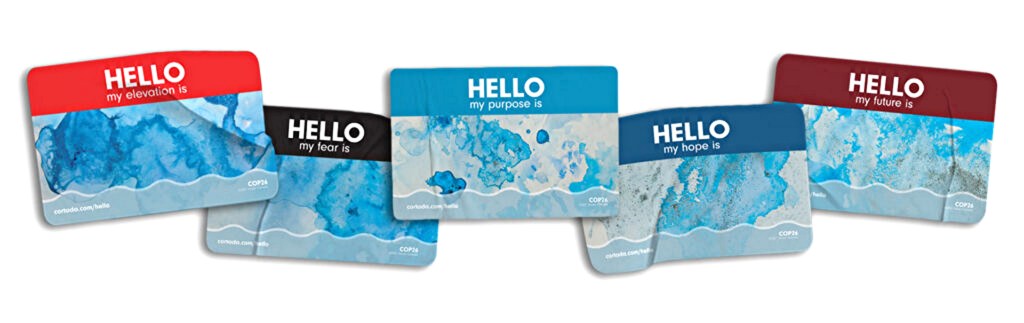
Rather than using a traditional name tag, participants are challenged to instead identify themselves with qualifiers such as their personal elevation, hopes, and fears.
Artist Statement on Website
The background of each of the five “HELLO” name tags (elevation, fear, purpose, hope, future) features a different piece from Cortada’s Antarctic Ice Paintings series, created on-site using sea ice and sediment samples provided to him by scientists working alongside him in Antarctica in 2007. Cortada, a recipient of a 2006-2007 National Science Foundation Antarctic Artists and Writers fellowship, currently serves as professor of practice in the University of Miami Department of Art and Art History.
To learn more about his work visit https://cortada.com/

 Rule Creations