Lecture Notes and Examples for Point of View and Focus

Point of view and focal points are planned and constructed by the artist with a specific purpose in mind

Thinking about point of view and focal points when analyzing or looking at a work of art can bring great enjoyment and appreciation for the work. In thinking about how the artist structured the figures in the painting or sculpture, one can get more satisfaction from the painting.

What are focal points, and what is point of view?

When looking at representational art, focal points and point of view direct the viewer and create a relationship between her and the subject of the work. The artist strictly controls the ways that the viewer’s attention and gaze travel across the work.

“Focal points work to predetermine the viewer’s approach to the painting,” says Hirsch. A focal point is the place in the painting where the eye is led to rest longest. A work can have more than one focal point or none at all. Sculptures can have multiple focal points that lead the viewer from one to the next as the artist intends. The key to remember about focal points and points of view is that nothing is by accident, and everything is plotted in advance by the artist.

Similarly, point of view determines where the viewer is in relation to the subject. Some artists use arches and curtains to place distance between the work and the viewer. This will create a passive stance in the viewer, as if watching the events or people portrayed from a seat in a theater.

Point of view can augment the subject by placing the viewer in a “worm’s eye view” or a “bird’s eye view.” This will create either a suggestion of power in the viewer or power in the subject. In a “worm’s eye view,” the subject is elevated in relation to the viewer and so is placed in a position of power. In these ways, the artist controls the view of the scene. In “bird’s eye view,” the person looking at the painting scenes to be looking down at the scene in the painting, while in “worm’s eye view” they are looking up. This is a deliberate choice by the artist.

Examples for discussion

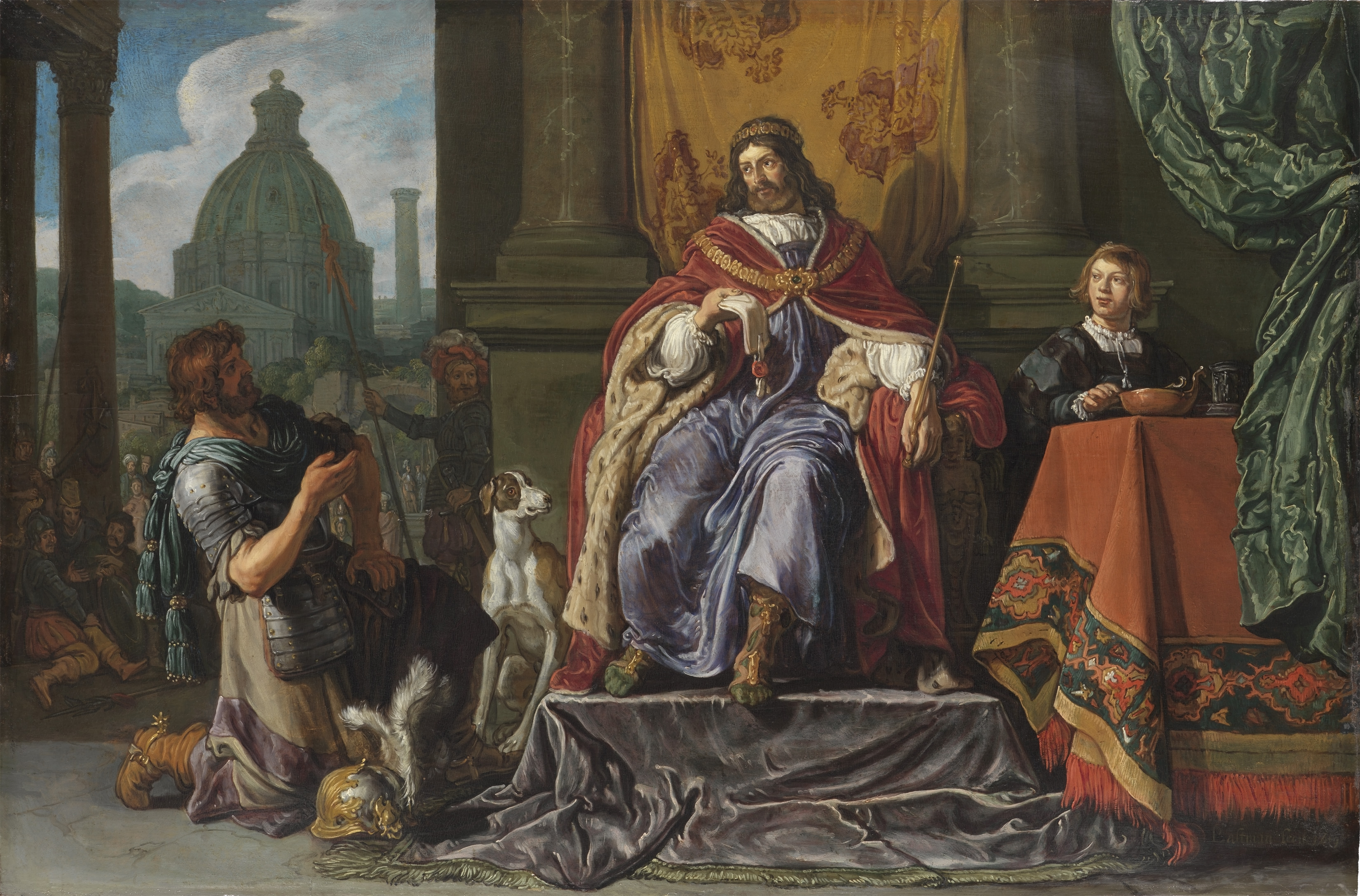
David Gives Uriah A Letter for Joab. Pieter Lastman, (1619). Using light and shadow, Lastman creates a focal point on David’s face. His gaze stares at Uriah whom he betrays, leading the viewer there too.

David. Donatello, (1440?), Bronze. In this sculpture, the focal points are many. David’s chest is wide and lead the eyes up to the face which looks down to Goliath’s head.

Relativity. Maurits Cornelis Escher, (1953). A lithograph, this work’s focal points are created by the placement of the figures on the stairs. The effect is whimsical and serves to amuse the eye. The point of view created by the skewed directions of the figures confuses the eye. In some places, the viewer looks upwards in worm’s eye view, while in the instance of the seated figure, the viewer is in bird’s eye view.

Christ of St. John of the Cross. Salvador Dalí, (1951). An incredible study in point of view, Dalí gives a viewer the chance to see Christ from the Heavens. His gaze leads the eyes down past the darkness to a morning by a river with a boat and two fishermen. The focal points are created using a variation of color and light. With this movement of focal points and play with point of view, the artist tells a story.

Christ on the Cross. El Greco, (1600-1610). In contrast to Dalí’s painting, this work has a slightly upturned point of view. The viewer looks on Christ slightly from below. Also, the undulating of the body creates a confusion. Here, Christ is alone but finally free of the bondage of the world and its suffering. His gaze tells that story as it looks to Heaven.


These are my notes from a lecture presented on Great Courses through the kind permission of my local library. It can also be accessed through Kanopy. The instructor is named Sharon Latshaw Hirsch, and she gave these lectures from Rosemont College. The title of the lecture is Where Am I? Point of View and Focal Point. Here is a link to the series. This does not constitute an endorsement and aside from personal growth, we did not gain from presenting this link.

References

Dalí, Salvador, Christ of St. John of the Cross, (1951), oil on canvas, WikiArt, 2023, https://www.wikiart.org/en/salvador-dali/christ-of-st-john-of-the-cross-1951, (Accessed June 20, 2024).

Donatello, David, (1440), bronze, Museo Nazionale del Bargello, Florence, http://www.museumsinflorence.com/musei/museum_of_bargello.html
(Accessed June 24, 24).

El Greco, Christ on the Cross, (1600-1610), oil on canvas, Getty Museum Collection, 2000, https://www.getty.edu/art/collection/object/108GFN, (Accessed June 23, 2024).

Escher, Maurits Cornelis, Relativity, (1951), lithograph, Artchive, 1998,https://www.artchive.com/wp-content/uploads/2023/04/Relativity-Escher-Maurits-Cornelis-1953.jpg, (Accessed June 24, 2024).

Graham, Heather, “Donatello’s David,” Smart History: the Center for Public Art History, https://smarthistory.org/donatello-david/ ( Accessed June 21, 2024).

Lastman, Pieter, “David Gives Uriah a Letter for Joab,” (1619), The Leiden Collection Catalogue, http://www.theleidencollection.com/wp-content/uploads/downloadable/PL-100-Pieter_Lastman-David_Gives_Uriah_a_Letter_for_Joab.jpg, (Accessed June 24, 2024).

Latschaw Hirsh, Sharon, “Where Am I? Point of View and Focal Point,” Great Courses: How to Look at and Understand Great Art,” from Hoopla, (Accessed June 2, 2024).
Puchi Noriega to lead in sculpture workshop

Noriega is leading artists in Miami in the path of discovery this Thursday, June 6th, 2024. 🆕🆕🆕 Updated to Tuesday, June 20th, 2024.

Noriega, who communicates, at times, anguish or whimsy to create sublime representational and abstract art, is offering this Thursday a day workshop titled “Faces and Expressions.”

The workshop is an opportunity to develop and practice the art of sculpture by working to build a face.

It will run from 10:00 a.m. to 4:00 p.m., light lunch will be served and materials provided. The cost of this workshop will be $150.

There is no dress code, aprons will be available.
The workshops are to be held at her studio in Cutler Bay.

Along with this event, Noriega will be leading a series in summer with other days in June beginning later in the month.

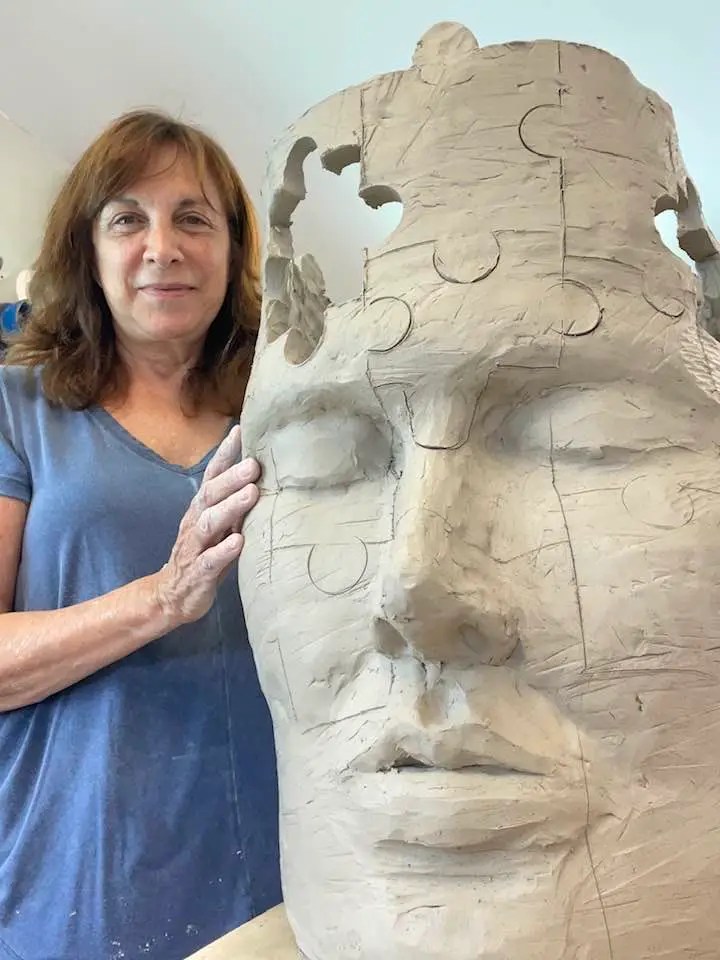
Picture of artist, Noriega with her sculpture of jigsaw patterned face.

Noriega, approachable, kind and friendly, will help make this afternoon of sculpture and exploration fun and rewarding.

Not only an artist, Noriega has experience as an art educator and has posted numerous videos to YouTube where skills can be honed and developed following her instructions. Here is a link to her channel: https://m.youtube.com/@PuchiNoriega.

According to the artist, “a couple of spots are available” to enjoy a day of sculpture. To sign up, reach out to the artist at noriegapuchi@gmail.com.

❤️

Update on Marcelle Zanetti

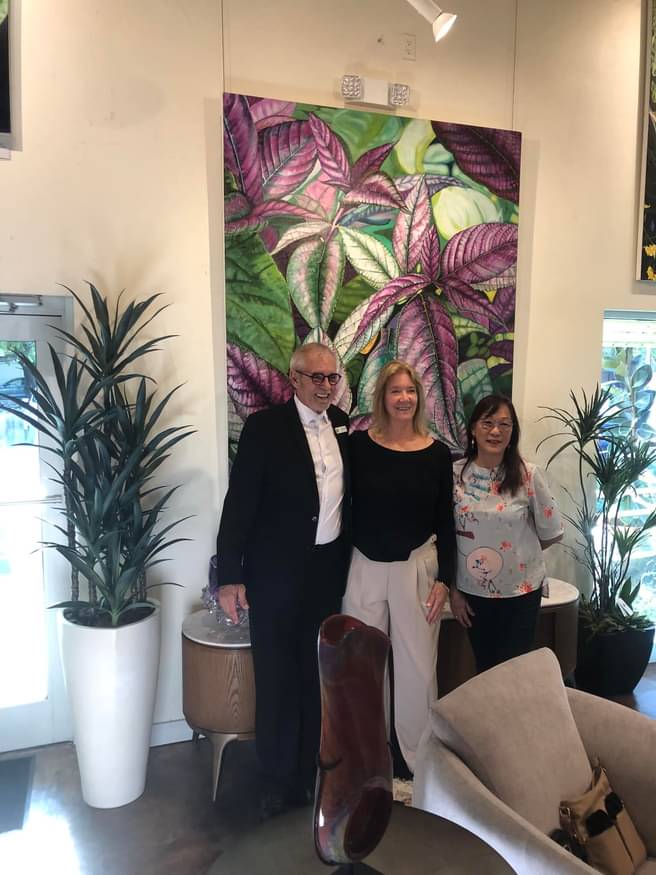
Marcelle Zanetti is enjoying an exhibition of her work. Her beautiful and colorful paintings of breathtaking natural wonder are on display for Miami’s art enthusiasts.

In Coconut Grove, she and Elizabeth Britten are displaying their work with the exhibition title of Two Woman Exhibition at Grove Gallery which is located at 2884 Bird Avenue.

A versatile artist, Zanetti uses her large paintings to highlight the extraordinary beauty in the minuscule. For example, her painting of pond lilies, Everglades Series 1 – Lilies, features lilies floating in a pond with tiny droplets.  They seem to be dazzling and shining with almost palpable moisture from the pond. The painting measures 40” by 60.”

Image of Lake Murray I and Lake Murray II, Marcelle Zanetti, 2024 at Grove Gallery

Other examples of the detail she painstakingly adds to her works of realism are pictured here. Lake Murray I and Lake Murray II show her skill in meticulously arresting attention and fixing it onto the images of stones and rushing water.

For more information visit http://www.marcellezanetti.com to learn more about the artist and this and her other exhibitions in Jupiter and the Village of Palmetto Bay.

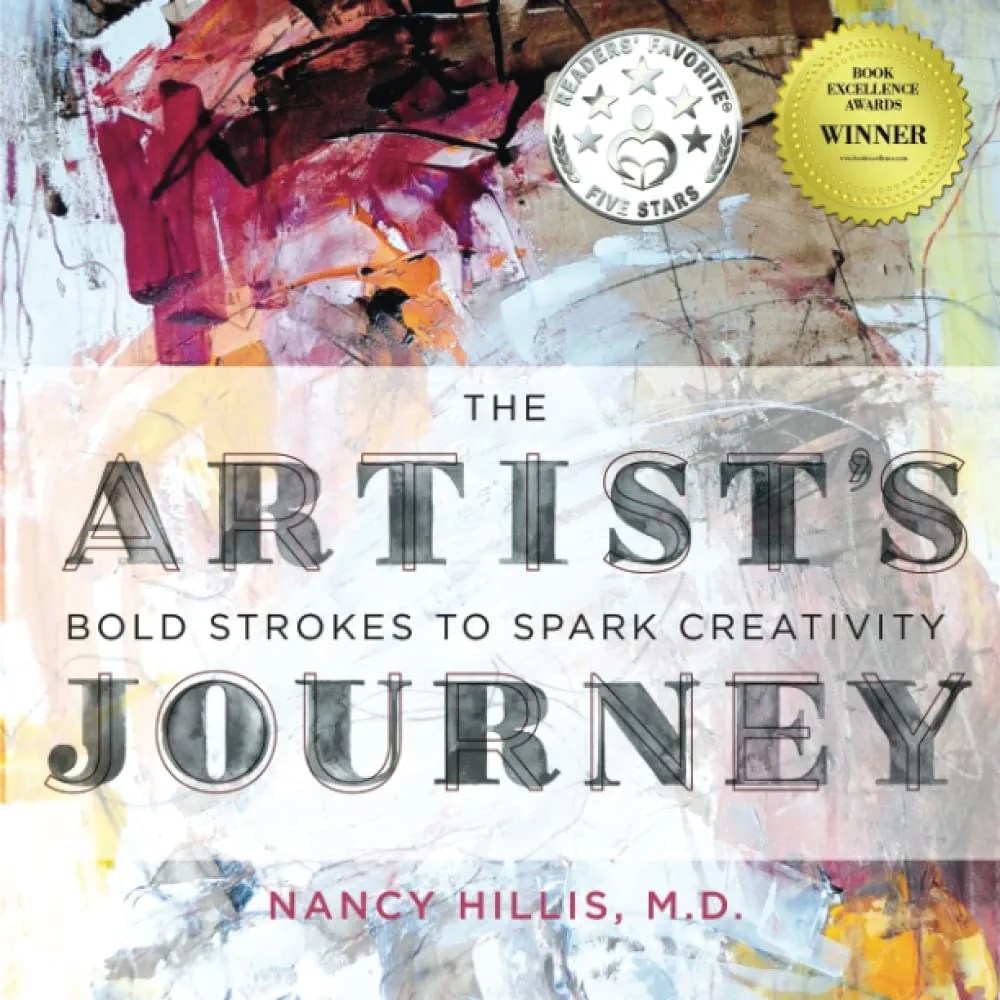
Book Review: The Artist’s Journey, by N. Hillis

Summary of the book’s contents

The Artist’s Journey is not an instructional manual for technique, nor is it a biography of a specific artist. This book discusses what goes into freeing the mind from inhibitions to tap into the inner source of creativity.

Hillis is a trained therapist who worked with existential psychology for years before the art bug caught her. She helped many people and uses this experience within the book.

It is structured in different parts with each containing an exercise that will help guide down into the core of the artist with the goal of bringing authenticity to the artist.

It assumes some experience as an artist and skill in  the chosen medium. Most of the exercises center around painting.

Personal response to The Artist’s Journey

Responding to this book was relatively easy. I enjoyed the writer’s style and ability, liked the organization of the content and agreed with her philosophy.

I especially liked the exercises. Although I am not a painter, I used her techniques with my writing to great effect. The first exercise for example centered around drawing a mind map surrounding the word “ugly.” I used it to write an essay about the emotion of sorrow which I find to be “ugly.”

She reminds us in this section that the term “ugly” has a meaning that changes over time and from person to person. “Sorrow” has been the subject of many paintings. They are beautiful, but to me, the contortions that sorrow performs on a countenance leave it strained and sometimes grotesque.

This painting by Cezanne always makes me think of the sorrow in a tragic relationship. It is called Pierrot and the Harlequin (1888)..

Connections with other books and philosophies

When I first started reading this book, I kept recalling The Artist’s Way by Julia Cameron. It is a different book because of its back story. While Cameron came to the writing of what is transformative text for artists through happenstance and personal trial, Hillis did so for other reasons. Cameron was a successful screenwriter while Hillis was in the medical profession.

Another connection came from the ideas about freedom that I talk about with my husband. He is a painter and successful author. He says that many times, he pursued projects that interested him for the love of writing and abandoned his particular genre. This made it difficult to market his work, but led him to feel free. Feeling free leads to better art.

Finally, I enjoyed her references. She cited quite a number of influential thinkers. Clarissa Pinkola-Estés, Carl Jung, Joseph Campbell and Shakespeare to round out the list. She had numerous references to music, film and books that placed her squarely in the middle of the grand conversation surrounding art and its making.

Useful 🌹🌹🌹🌹