The “Queen of the Night” & Early Mesopotamian Sculpture

Reaction to the Burney Relief

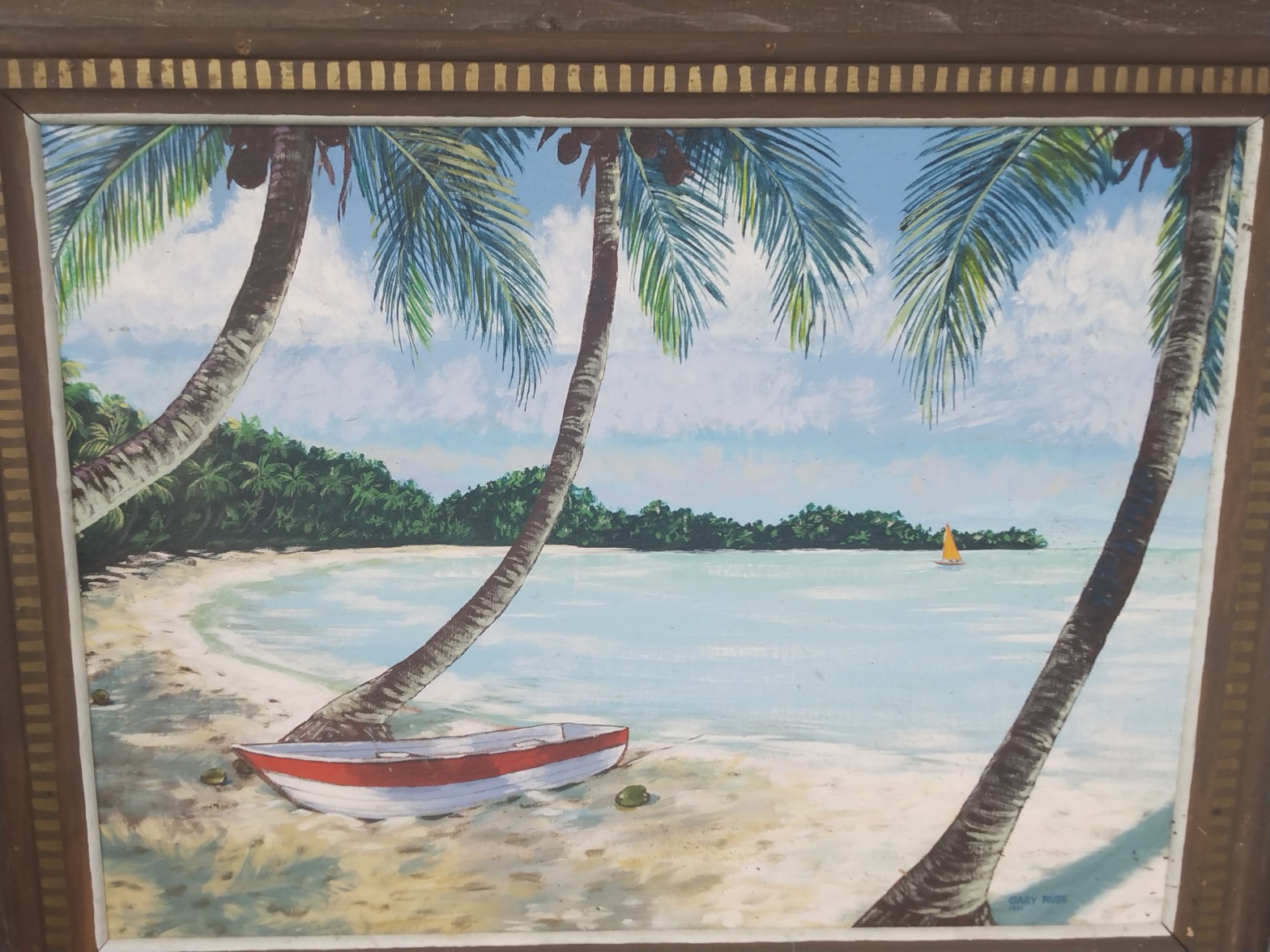
The Burney Relief, or “The Queen of the Night” fascinates the viewer because of the symbolism used in the sculpture, its odd history and the myths surrounding its subject. Seeing this female figure standing on the backs of lions and holding out her arms from her nude form with strength and vitality reminds one of power and integrity, courage and vigor.

Timeline

Imagine being transported to the faroff time of 1750 BC. You are in the bustling kingdom of Babylon under the rule of King Hammurabi and the Gods of Heaven reign supreme.

In the book of Revelation, according to Dr. McDonald, Babylon is supposed to enjoy a reputation in the modern world as the abode of harlotry and depravity. “It is cursed by the Bible.” Dr. McDonald says that “examining the history reveals quite a different picture.”

The home of this sculpture was the place where the law code of Hammurabi, which is in many ways the basis of modern law, was created. People there were supposed to respect the Gods and their priests and rulers.

The King himself said that he ruled under God and was therefore a subject himself. He was said to have conquered all of the Near East and ruled effectively until the time of his death.

Hammurabi formed the kingdom of Babylon with the goal of ensuring the happiness of the people. As Dr. McDonald discusses, under his rule many improvements were made to the infrastructure which made living better for his people. Although a warrior, the King brought peace and stability to the people in the kingdom.

The Sculpture

The sculpture is full of symbolism and strength..
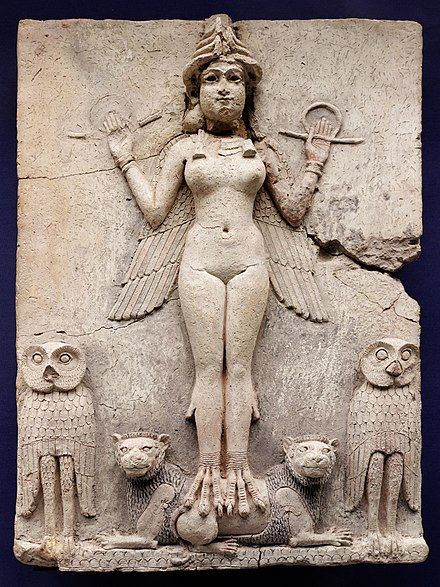
Burney Relief at British Museum

The figure is of a voluptuous female with a curvy body and symmetrical features. Her breasts and hips depict youth and health as they are full and round. She has smooth skin which also points to health.

She has animal features, too. Her down turned wings resemble those of a predatory bird and to complement this she has bird feet with talons that could tear open a victim.

According to the British Museum website, she has many accessories that support the idea that this sculpture is of the Goddess.  Her headdress symbolizes her divinity, and her bracelets and necklace suggest great power.. Also, the rods and rings in her hands symbolize justice which means that she is powerful indeed.

There is some paint residue on the sculpture so experts have been able to determine what it might have looked like. This picture describes that theory. Dr. McDonald presents a similar rendering in her lecture.
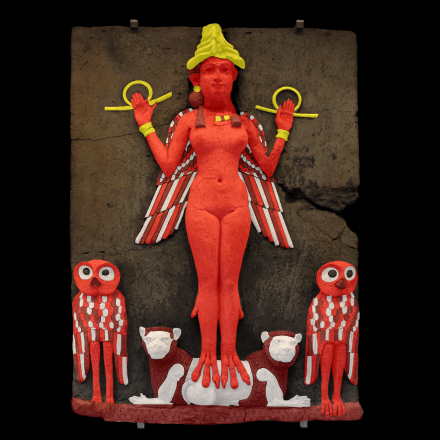
Painted sculpture

The high relief sculpture (which means that it was moulded so that the figure’s features extend outwards from the surface) is made of straw tempered clay. That means that the clay was mixed with straw to keep it strong and firm.

It measures 20 by 15 inches. Some experts, according to McDonald suggest that it could have hung in a bordello, but other sources at the British Museum say that it could have been made to hang in a shrine.

Either way, wherever it was placed, it commands attention. The lions were used by the Babylonians to accompany Ishtar. The owls were tied to the night. The small platform is supposed to mean the mountains which according to recognized experts was the home of the Gods.

Controversy

Is it Ishtar or her sister goddess?

Some say that this sculpture is not of Ishtar but of her sister who is said to rule the underworld. McDonald makes a great point that the Babylonians didn’t make sculptures of demons or this type of sculpture of demons, so it doesn’t seem to be her sister.

Then, Ishtar was always shown with lions. Her standing on the backs of these lions in a non-threatening way implies that these are her lions. Her talons do not scar or injure the lions but only stand on them.

Some experts say that the fact that the wings turn downwards mean that she is the sister because they symbolize the underworld when placed that way, but according to the Brooklyn Museum’s research on myths surrounding Ishtar particularly their work on Gilgamesh reference the myth of her descent to the underworld with her lover Dumuzi. It is reasonable to think that it is Ishtar within that narrative space.

Is it authentic?

Another controversy surrounding this sculpture focused on whether it was even real. All sources indicate that thermoluminescence testing revealed it’s authenticity in 1933.

This type of dating uses radiation to determine the age of pottery. It examines the material’s composition to pinpoint when the clay was subjected to heat in order to create the sculpture. The British Museum performed this test in 1933 and  judged it authentic from the Old Babylonian Period.

Related Works

Two related works exist: one is at the Louvre and the other at the British Museum, too.

There is a vase at the Louvre with another depiction of Ishtar. On the vase are drawings of birds and fish. Ishtar is shown on it with similar birdlike feet but there they are not as finely rendered.

Also at the British Museum is a “small, crude plaque” with a goddess depicted with down turned wings and the crown of divinity. It is also clay.

References

The British Museum, “The ‘Queen of the Night’ relief,” in Smarthistory, February 26, 2021, accessed May 17, 2024, https://smarthistory.org/the-queen-of-the-night-relief/.

Brooklyn Museum, “Ishtar,” (n.d.), accessed 17 May, 2024, https://www.brooklynmuseum.org/eascfa/dinner_party/place_settings/ishtar#:~:text=A%20multifaceted%20goddess%2C%20Ishtar%20takes,shown%20winged%20and%20bearing%20arms.

Diana McDonald, PhD, “Queen of the Night, Babylonian Goddess,” 30 Masterpieces of The Ancient World, Great Courses, 2013.
Mendoza Takes His Work to Las Olas

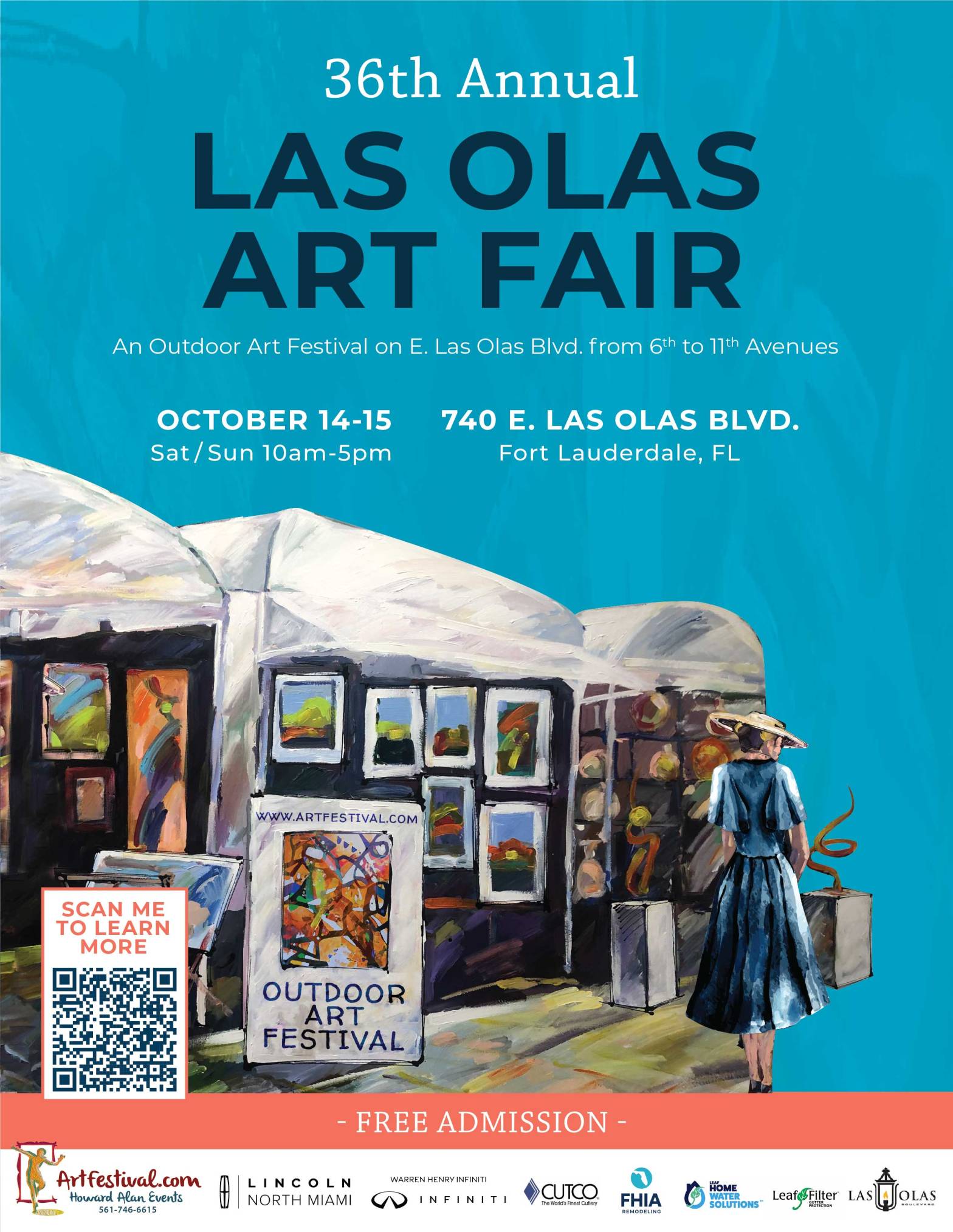
On the weekend of October 14, 2023, the 36 th Annual Las Olas Art Fair came to the “Jewel of the City” of Fort Lauderdale as Las Olas Boulevard is called. The juried art fair featured artists like Alfred Addo, Tali Almog and others. Artist Tony Mendoza, was among those accepted and showed his work to an appreciative crowd. He said that he had a positive experience at the fair.


The fair was established by promoter Howard Alan. The art fair attracts quite a crowd.


As mentioned, the Las Olas Art Fair is a juried exhibit which means that artists and crafters have to apply and be accepted to display their works, so it is nice to see Mendoza there representing Miami!


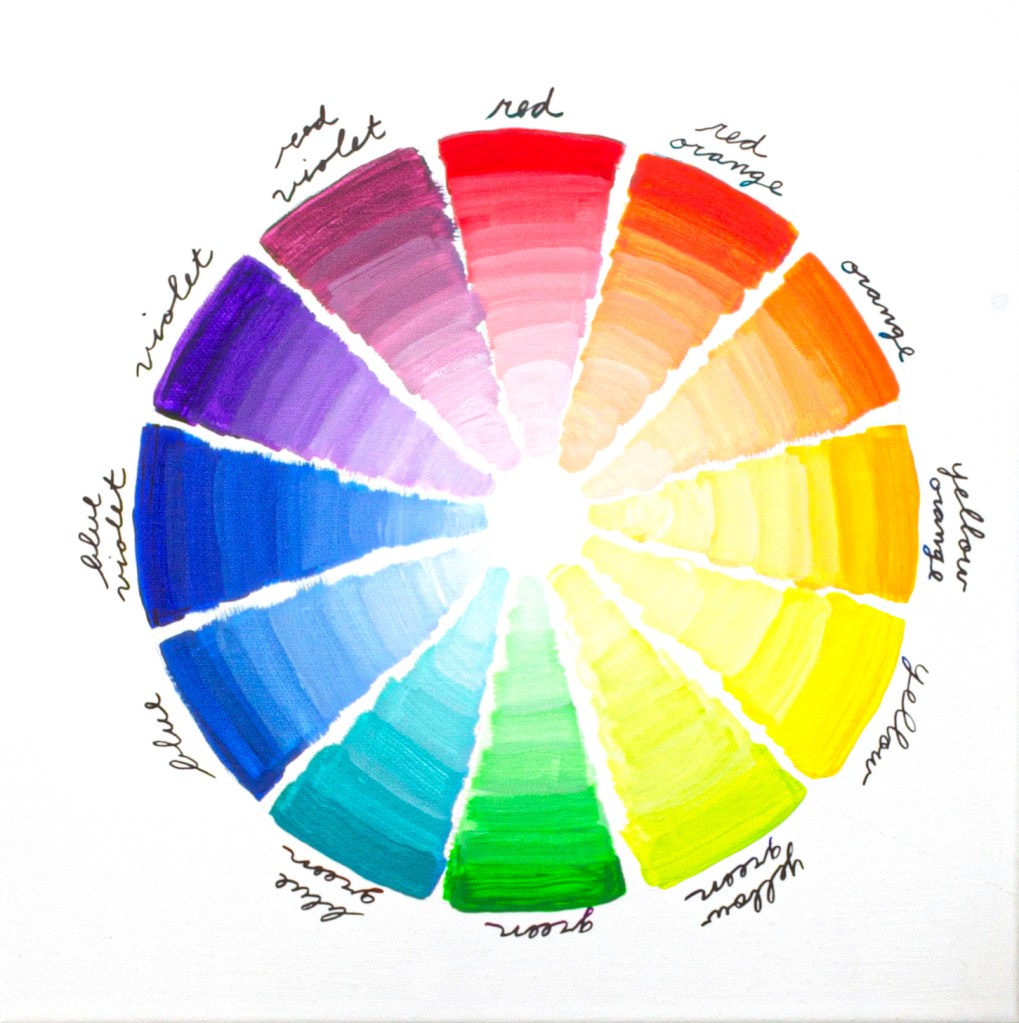
Mendoza’s work is interesting because of its comic sense and dazzling use of color. His work is never dull as it reaches for excitement and finds it in color and verve. While I was reading about color theory, I saw how complementary colors align, creating vivid contrasts of orange and blue while triadic colors blue, yellow and red tend to surprise. Immediately, I thought of Mendoza.

Brief Analysis


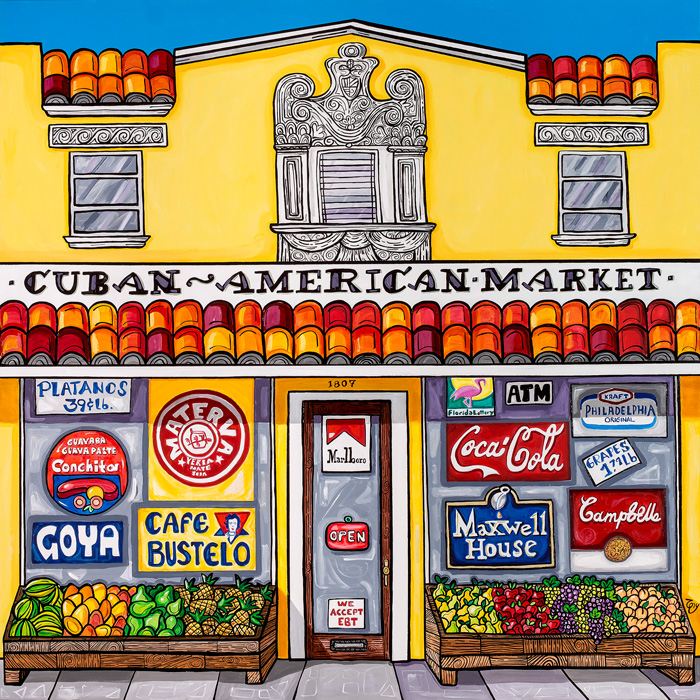
His painting, “Cuban American Market,” has the blue sky right next to the orange tiles on the roof of the market. Then, the placards on the walls of the market have an arrangement of the triadic choices. For example, the Maxwell House sign, Coca-Cola sign and the Lotto used blue, red and yellow respectively. Also in the tiles on the roof, analogous colors, orange, yellow orange and red orange create harmony in the painting. The colors in this painting were as close to theory as could be which really shows a respect for the wheel.


At The Fair


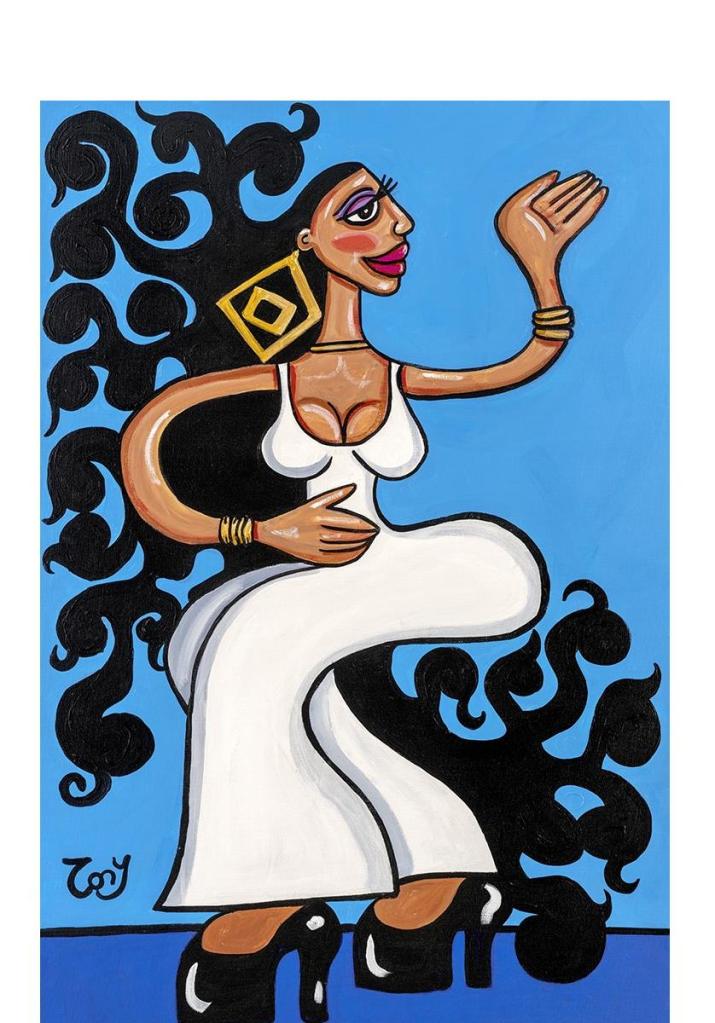
Among the paintings that he chose to display were “Malas Lenguas,” “Tres Marias” and “Tumbao.” I like “Tumbao” because I really like Celia Cruz, and Mendoza said that it was inspired by one of her songs. I like it also because of the drama in the work. The piece depicts a voluptuous woman with long hair in a white dress against a solid blue background. Her hair has so much movement! Tumbao is Cuban slang for chutzpah or spirit.

“Tumbao,” © Tony Mendoza Art


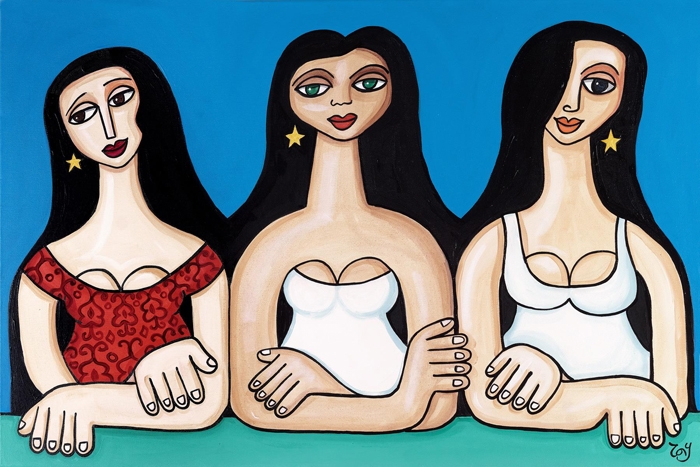
“Tres Marias” shows three women who are very similar in appearance. Their expressions capture wistfulness, directness and compassion. The three Marys or Tres Marias seem impassive but caring as if they see our suffering and wish that we would not have to experience it but recognize the inevitable nature of it. The Mary on the right even looks somewhat humorous as if watching a precocious child play. I really like that piece.

“Tres Marias,” © Tony Mendoza Art


Tony Mendoza liked the experience at the art fair. He really enjoyed his stay at the Riverside Hotel and said that he intends to return to the fair soon.


The event is for artists and crafters and accepts applications. Mendoza said that it takes place twice a year.

Links


Reach out to http://www.artfestival.com for info on securing a spot for next year if that floats your boat.
Tony Mendoza can be found at http://www.tonymendozaart.com.

Works Cited

DecoArt. “Color Theory Basics: The Color Wheel,” DecoArt Inspiration Blog, Accessed October 16, 2023. shop.decoart.com/blog/color-theory-basics-the-color-wheel/

Howard Alan Events. “36th Annual Las Olas Art Fair,” http://www.artfestival.com. Accessed October 17, 2023. Artfestival.com/festivals/las-olas-art-fair-fort-lauderdale-florida

Mendoza, Tony. Interview. Conducted by Helen Lemus, week of October 16, 2023, via email.

Response to Gary Alan Ruse’s “Beach Scene”

I really never expected to find such a wonder among my husband’s collection. It’s not that I thought little of his artistic talent, but rather that it was hidden away among some old cloths in a secret corner among a lot of old empty plastic bags and dust. After peeling everything away, I found it, a tender painting that has some mystery and touched the heart.

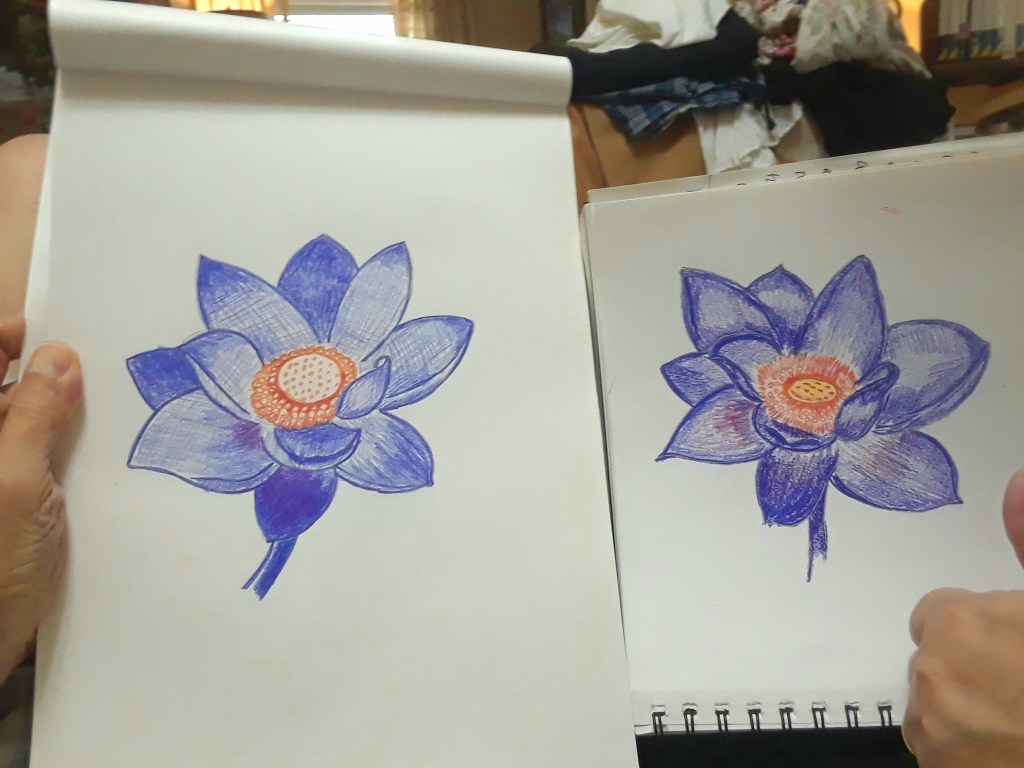
The image is of a peaceful setting that is well known to Miami residents. It is a beach overlooking a wide inlet. On the beach’s white sand, there is a small boat and three curved coconut palms. In the distance, there is a sailboat on the placid water. While looking at the image, I feel a sense of tranquility and completeness. My husband did the painting upon returning from Vietnam, and I imagined that this peaceful image must have been somewhere inside of him while he was overseas. He had made the painting in 1971, and I found it while cleaning this year in 2023.

The painting, at 52, creates a mystery. Why is a small boat on the shore, and why is the other boat still at sea? Where are all the people? Originally, I thought that the sailboat was anchored, but my husband pointed out that the sails weren’t down. I really became immersed in the painting and started to create a story about it in my head. I thought that the small boat was a loved one who had finished his time at sea and had arrived at a peaceful place to rest. Meanwhile, the sailboat was still on the seas. The distance of the sailboat from the shore made me think that the person still in their journey was not near their end. Because of the size of the small red boat, I thought that it was a young, vivacious person with a lot of strength or vigor. Also, the coconut trees made me think of plenty and satisfaction. The person who had landed would have food. Their shade would provide shelter. I asked my husband if he had a specific place in mind, and he said that it was his “ideal beach.” Here the idea of a beach, of perfection supports my thought of the small boat arriving at the afterlife, since, the afterlife is usually a place where everything is perfect and peaceful and all souls find solace and comfort there.

Looking at the work like this brings me some measure of peace. Right now I’m listening to one of Rachmaninoff’s Romances, and the experience of the painting is much different than when I first saw it. At first, I was looking at its composition. The balance of the sides of the painting made an impression on me. The beach and the water shared an almost equal spatial arrangement with the beach on one side and the water on the other. The lines in the painting intrigued me also, as the small boat’s markings led to the water and back to the bright yellow sail as did the coconut palms’ curves. Most of all, its subject led me into contemplation. I was moved by the peace and stillness of the image plus the mysteries of the boats. I have just found out about the death of someone quite special to me. Seeing this painting helped me think that my friend was waiting in a sunny and peaceful place. So, my impression of the painting has changed from sincere admiration to an appreciation reserved normally for someone who has provided healing.

My husband liked the fact that I enjoyed thinking about his painting and that it brought me some peace about my friend. He says that he doesn’t remember what the boat symbolized, if anything, and that he chose those particular colors for technical reasons. It’s always nice to find a gem hidden away in the dusty corners of a mind, heart or home. This was definitely worth closely meditating on and I’m glad to share space with his work, and the artist isn’t so bad either! 😉

Sketching Session

Purpose

This session served a dual purpose. On one hand, we got to do something fun together. Gary and both love making things, so this gave us an opportunity to do something together. The other purpose was instructional. I wanted to practice my shading skills.

I learned about hatching, cross-hatching and doodling. I also learned how to turn a colored pencil so that the tip will last longer and I won’t have to sharpen it as much.

Materials

  • Prismacolor® Colored Pencils
  • Pencil
  • Mechanical Pencil
  • Sketchbooks
  • Erasers

Procedure

We took a drawing for inspiration and tried to copy it. It was a lot of fun. I started by doing the outline of the flower using a regular #2 pencil. Gary was using a mechanical pencil. I tried to keep each line as true to the original in terms of length and curve as I could. When that was done, I looked at it and just kind of stared. There was one petal that was a little too big, so I erased and kept at it.

Then, I took the colored pencils and practiced my shading. This was all very relaxing and brought down my blood pressure a bit. It was easier to breathe, and my mood improved. Gary said that he had his doubts as first, but in the end was pleased with our little session.

The Image

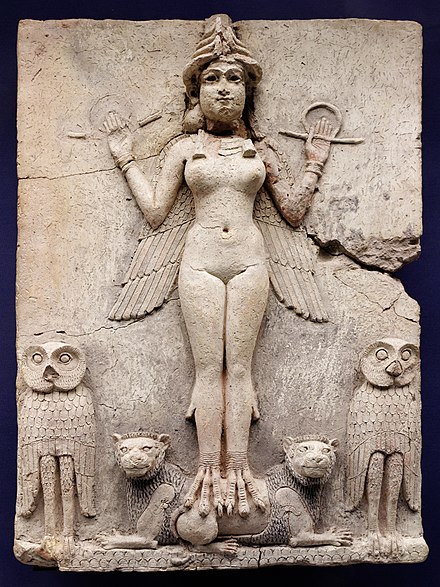
He did the one on the left, so you kind of know that I did the one on the right. Really, there is no political significance to this, it’s just a coincidence.

Even though we both started with the exact same flower, we deviated slightly with the shading. Value judgements are not appropriate for this type of thing. Oh, what the hell! We did a great job.

This is the first post in our personal series on learning artistic techniques. Although Gary minored in Graphic Design at UM where he graduated, I am a sort of novice. This is a wonderful experience. I hope that you like our humble sketches.